

Today (16/11/2011), we visited the Qioptiq plant in
Singapore near Tractor Road. It was a great day actually as we had the fortune
of being hosted by a very warm and friendly engineer from the plant, Mr Ronian
Siew (This is his blog: http://roniansiew.blogspot.com/)
It was truly fascinating to be able to interact with him,
from there learn about his work and life experiences as well as how Qioptiq
manufactures its products.
Not once did I get bored during the 3 hour learning journey.
So the question boils down, did I answer the questions I set to myself in my
Pre-Learning Journey reflection?
In the previous article on Qioptiq, I basically touched on
the company’s vision and line of work. I also expressed my hope in wanting to
find out more about such optic companies and their line of work.
Well, most of my questions were answered plus the fact that
I learnt a little bit extra (I will elaborate on that “extra” bit in just a few
paragraphs)
The first thing we got to see when we went in was this
gorgeous display cases which had camera pieces, lenses and even rifles! These
were probably part of the pantheon of products manufactured by Qioptiq in its numerous
innovations.
We were then given a short introduction to the company. It
turns out that Qioptiq is much more than just an optics company. It actually
goes further. It specializes in four fields, namely these:

Furthermore, it goes on in other fascinating areas such as
diamond turning. In a nutshell, diamond turning is basically a process of
mechanical machining of precision elements using machine tools equipped with
natural or synthetic diamond-tipped tool bits. In Qioptiq’s case, the diamond
turning is done to shape the lens, determining its characteristics such as
curvature.
 |
| A diamond turning tool |
In terms of medical and life sciences, Qioptiq actually
manufactures lenses used within the x ray machine which is a very important
invention as most might understand.
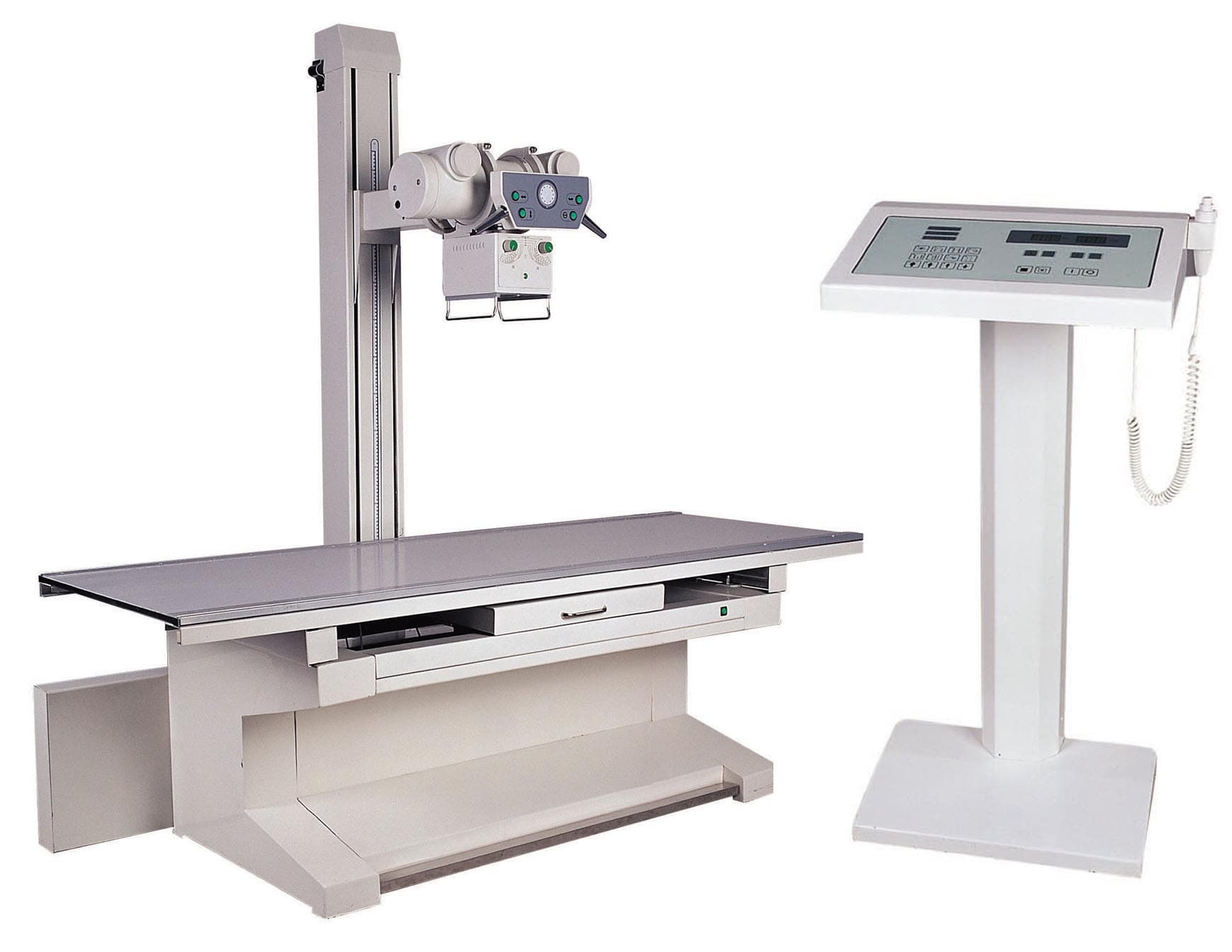 |
| An X Ray Machine |
One thing which my senior had pointed out was the development of a liquid lens. This is a device that hasn't been done by Qioptiq, rather it is done by another company Varioptiq. The liquid lens will be a revolutionary product for the simple reason that it can manipulate its focal length and thus the image quality. Take a look at this video which shows some tinkering with a liquid lens.
Furthermore, it is a pretty stable and low power lens. This could very well, alter the way cameras and imaging applications are made. This could be an interesting project idea to work on if one can collaborate with Qioptiq in the development of such a product.
Another interesting point to note was how Qioptiq aimed to be the “supplier of choice”. They also wanted to be “your global one-stop source for photonic solutions” which is pretty much in line with my Pre-Journey research which I found out that Qioptiq wants to be the “key to photonics innovation”.
Furthermore, it is a pretty stable and low power lens. This could very well, alter the way cameras and imaging applications are made. This could be an interesting project idea to work on if one can collaborate with Qioptiq in the development of such a product.
Another interesting point to note was how Qioptiq aimed to be the “supplier of choice”. They also wanted to be “your global one-stop source for photonic solutions” which is pretty much in line with my Pre-Journey research which I found out that Qioptiq wants to be the “key to photonics innovation”.
This pretty much shows the ambition of the company to come
up with brand new innovations and in essence, become the best in the business.
Considering the fact that Qioptiq was borne out of several acquisitions from
several optical companies in different fields, one must understand that Qioptiq
is itself an innovation. How many companies out there are actually
conglomerates or mergers and as successful?
This is an achievement unto its own.
One of the points presented which really shocked me was the
company’s interest in combining low cost development with high quality
manufacturing. That is actually a pretty tall order. Most companies would
rather charge a high cost and let their consumers absorb the increased costs.
It is very rare to see a company willing to combine the costs factor along with
the quality factor, two of them which have been attributed by many to be
inseparable. It turns out that Qioptiq is one of the company’s leading in this
direction.
One business model which I learnt from Qioptiq would be the
idea of MVP (minimum viable product). Qioptiq is one of those companies which
is pretty realistic and focuses on coming up with products that are good enough
for sale. Most would think that science and engineering is about perfection and
coming up with the most exquisite and flawless product. But this just isn’t
possible in most situations. Some idea or innovation may remain stuck in the
laboratory forever unless it goes through the process of tried and testing by
the consumers themselves. This can then results in improvements and of course a
better product.
Something which also struck me was Qioptiq’s definition of
innovation. Most companies would think that innovation is about creating
conveniences or thinking of brand new ideas. Rather, Qioptiq’s version is to
solve problems under constraints. And this is true. Innovation is usually about
solving problems under constraints.
Regarding some of the questions discussed during the session, I would like to raise an example of a future trend to do with a merger of technology and humanities. That would be the development of the personal computer.
Regarding some of the questions discussed during the session, I would like to raise an example of a future trend to do with a merger of technology and humanities. That would be the development of the personal computer.
Take a look at some of the most famous inventions or
innovations in the world. Who would have thought that computers would be
operated graphically? It was only borne out of a desire by the programmers at
that time to come up with a simple yet intimate way of interacting with the
computer. This was what gave birth to the GUI (Graphical User Interface) which
we see today in Mac OS X and Windows.
At that time, people like Bill Gates and Steve Jobs already envisioned the future of computing. Bill Gates said that Windows aim was to "have a computer on every table in the world".
That is pretty much what's on every table in the world. After all, who hasn't heard of a computer in this day and age?
Steve Jobs went a step further after he rejoined Apple where he unveiled the Digital Hub strategy. He basically felt that we were entering the PC's third golden age, which was the digital lifestyle. Everything would be contained within all our mobile devices from cameras, computers and music players.
Take a look.
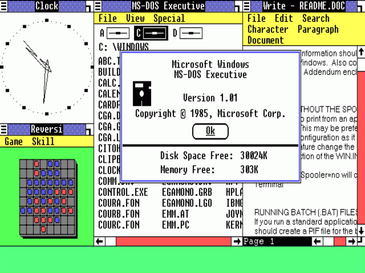 |
| Windows 1.0 |
At that time, people like Bill Gates and Steve Jobs already envisioned the future of computing. Bill Gates said that Windows aim was to "have a computer on every table in the world".
That is pretty much what's on every table in the world. After all, who hasn't heard of a computer in this day and age?
Steve Jobs went a step further after he rejoined Apple where he unveiled the Digital Hub strategy. He basically felt that we were entering the PC's third golden age, which was the digital lifestyle. Everything would be contained within all our mobile devices from cameras, computers and music players.
Take a look.
Well, how does one take this vision a step further. Well, in my opinion, the next step would involve returning to the principle of intimacy. Computing can be used as a tool for creation, as a canvass for the artist and a mould for a sculptor. This would herald a new age of computing, one that would involve touch technology that we now see in iPhones and iPads.
This video by Jeff Han shows how he manipulates his own touch screen device as an artistic device to create.
This next stage could potentially change the way we use our computers again. And if we take a step back, this innovation would not have been possible if people like Steve hadn't thought of using computers as a tool to be used to design and create as well. Technology and humanities have been blended as one in this case.
In all, I truly learnt a lot from my visit. It changed my perception towards innovation in how it takes a sense of realism combined with creativity that results in products in the market today. This thus concludes the first half of my article which talks about my general experience. My second and final half will deal with my reflections and lessons which I learnt from my interactions with the Qioptiq engineer, Mr. Ronnian Siew.
 |
| The Qioptiq plant that we got to visit |
Resources

- http://www.varioptic.com/en/home.html
- http://www.nature.com/nphoton/journal/vsample/nsample/full/nphoton.2006.2.html
- http://www.nature.com/nphoton/journal/vsample/nsample/full/nphoton.2006.2.html
No comments:
Post a Comment